
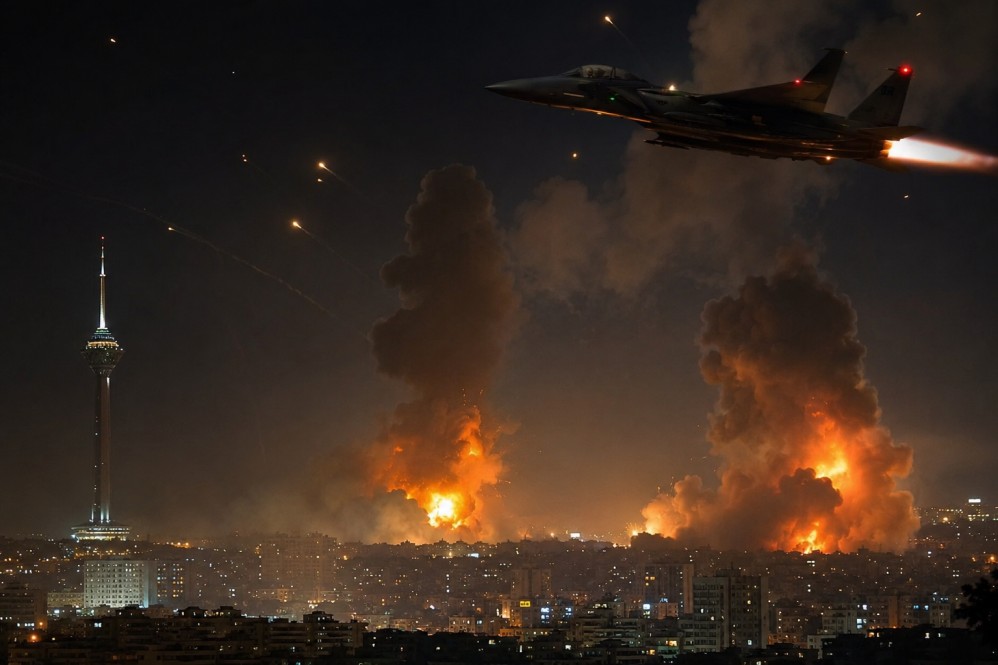
In response to escalating tensions, the United States has launched three consecutive nights of airstrikes on Iran. President Donald Trump has also unveiled plans to implement a maritime blockade and impose a 20% tariff on cargo moving through the Strait of Hormuz, a crucial shipping lane, under enhanced US security measures. The US Central Command articulated that these strikes aim to debilitate Iran’s military capacities and thwart any potential threats to commercial shipping and civilians in this vital waterway. President Trump has affirmed that military actions against Iran will persist, emphasizing the US’s commitment to maintaining security control over the strait.
This development comes on the heels of incidents where two oil tankers from the United Arab Emirates were reportedly hit by Iranian cruise missiles while in Omani waters. The attacks resulted in the death of an Indian crew member and injuries to several others. Such incidents have contributed to an upswing in Brent crude oil prices, which have surged nearly 8%, underscoring the growing apprehensions regarding global energy supplies amid the heightened tensions.
Iran has responded to the proposed US blockade with strong condemnation, accusing Washington of jeopardizing international energy security. The Iranian government has warned that any attempts to limit its access to maritime routes would be met with a robust response. Furthermore, international maritime authorities have pointed out that enforcing mandatory transit fees in international waters lacks legal grounding under current international law, adding another layer of complexity to the unfolding situation.
The ongoing military escalation has intensified fears of a broader regional conflict. The continued attacks are not only disrupting shipping activities but are also driving up oil prices, contributing to uncertainty in the global economy. As tensions simmer, the potential for further instability in the region remains a significant concern for international stakeholders.