
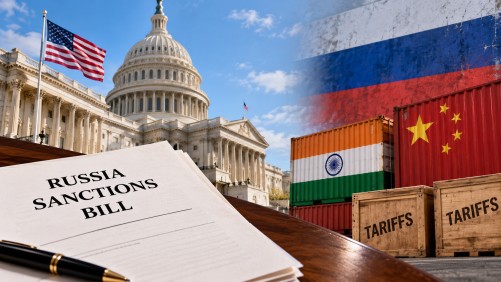
In a significant geopolitical move, the United States is poised to intensify its economic pressure on Russia and Iran through a new sanctions package. The US House of Representatives has approved the Lindsey O. Graham Sanctioning Russia and Iran Act of 2026, which could allow President Donald Trump to impose tariffs of up to 100% on nations continuing to purchase Russian oil and natural gas. This legislation, having already secured passage in the Senate, now awaits the president’s consideration.
The sanctions aim to disrupt key sectors of Russia’s economy, notably its energy and defense industries, and target the country’s network of oil tankers that are allegedly used to bypass existing sanctions. Beyond Russia, the bill extends punitive measures against Iran and introduces new sanctions on Russian officials and financial entities linked to sanctions evasion.
A significant aspect of the legislation is its potential impact on international trade, particularly with countries like India and China, which are prominent buyers of Russian energy. While the bill does not automatically enforce a 100% tariff, it grants the US president the authority to apply such tariffs under specific conditions related to ongoing purchases of Russian energy or efforts to circumvent sanctions.
India, a significant player in the global energy market, has responded by reiterating that its energy procurement decisions are guided by national interests. The potential imposition of tariffs could add complexity to existing US-India trade negotiations, highlighting the broader implications of the US’s strategic economic measures.
This legislative development underscores the United States’ ongoing endeavor to leverage economic tools as a means of exerting pressure on geopolitical adversaries, with the aim of curtailing their economic capabilities and global influence.