
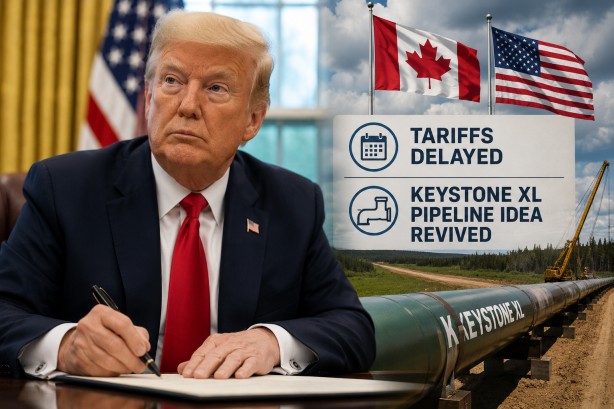
In a recent development, US President Donald Trump announced a three-day delay in implementing a proposed 50% tariff on Canadian goods, citing advancements toward a new trade deal between the two nations. Trump expressed optimism about nearing the finalization of an agreement, while Canadian Prime Minister Mark Carney acknowledged significant progress had been achieved, though more work remained to be done.
The tariffs, initially intended to impact Canadian exports worth billions, including items like wine and hockey gear, have been temporarily postponed. This delay grants additional time for both countries to iron out the specifics of the agreement. The move comes amid a backdrop of tense US-Canada relations, characterized by ongoing tariff threats and retaliatory trade actions.
Amidst discussions of trade, Trump hinted at the possibility of reviving the contentious Keystone XL oil pipeline project. He cryptically remarked that the project “may be awoken from the grave,” although he did not elaborate on how it might relate to the current trade negotiations. The pipeline, originally designed to transport oil from Canada’s western region to US refineries, faced a halt when a critical US permit was rescinded in 2021, following long-standing opposition from environmentalists, landowners, and Indigenous groups.
Both the United States and Canada continue to be significant trading partners, with an extensive exchange of goods and services amounting to hundreds of billions of dollars annually. The looming tariffs have sparked concern among Canadian businesses about the potential for increased costs and restricted access to the US market. This latest pause in tariff implementation could provide a window of opportunity for the two countries to solidify a new trade framework and alleviate some of the economic tension that has marked their recent interactions.