
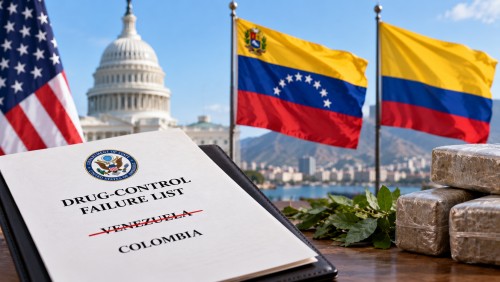
The United States continues to focus on counternarcotics efforts in Latin America, recently making a key decision regarding Venezuela’s status. The U.S. government has removed Venezuela from its list of countries that have failed to meet international counternarcotics commitments, acknowledging what the Trump administration describes as progress made by the country in combatting drug trafficking under interim President Delcy Rodríguez.
Venezuela’s removal from the list marks a shift in U.S. policy, as the nation had previously been categorized as not fulfilling its obligations in this realm. The U.S. recognizes improvements in Venezuela’s efforts to tackle drug-trafficking organizations, a significant factor in its revised status.
Meanwhile, Colombia remains on the list, which still includes four countries identified by the White House as having fallen short in their counternarcotics efforts over the past year. President Donald Trump has indicated that Colombia could be removed from this designation in the future if it demonstrates further progress in addressing issues such as coca cultivation, cocaine production, and drug-trafficking networks.
Colombian officials have expressed their commitment to a comprehensive approach targeting the entire drug-trafficking chain. This includes addressing illicit crop production, dismantling production facilities, disrupting trafficking routes, and tackling the financial networks associated with these activities.
The recent U.S. decision underscores Washington’s ongoing efforts to foster counternarcotics cooperation across Latin America. Despite the improvement in Venezuela’s status, both Venezuela and Colombia are still identified by the U.S. as major drug-transit or illicit drug-producing countries for the fiscal year 2027, highlighting the ongoing challenges in the region.