
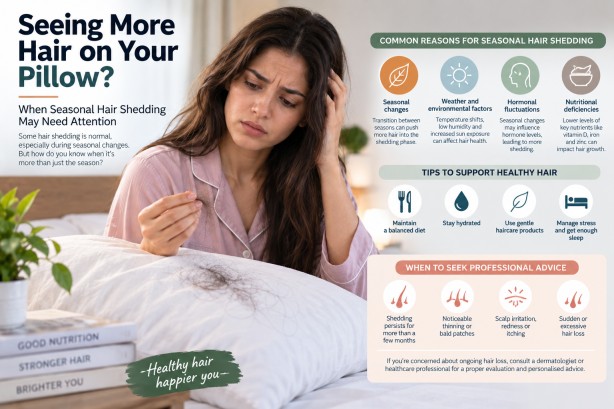
More hair on your pillow, in the shower, or caught in your comb than usual can be alarming. While the change of seasons can sometimes trigger increased hair shedding, not all instances of noticeable hair loss should be attributed solely to weather changes. Grasping the nuances of hair loss, such as its pattern, duration, and severity, can help determine when it might be necessary to look deeper.
Hair growth naturally cycles through phases of growth, rest, and shedding. At times, more hairs than usual may enter the shedding phase, making hair loss seem more pronounced. Typically, mild seasonal shedding resolves on its own without causing significant changes to overall hair volume. Conversely, persistent or severe hair loss may point to other causes and should not be automatically dismissed as a seasonal issue.
Temporary hair shedding tends to be mild and improves over time. However, excessive shedding is more apparent, with larger clumps of hair falling out during washing, brushing, or styling. Some may observe thinning, especially around the hairline or parting. When hair loss becomes sudden and continues for several weeks, it is important to keep a close watch on the situation.
Seek professional guidance if you experience prolonged hair shedding lasting several months, noticeable scalp thinning, a reduction in hair density, localized hair loss, sudden or severe shedding, or hair loss following illness, stress, significant weight loss, or changes in medication. These occurrences might be linked to temporary disruptions in the hair-growth cycle or other underlying conditions.
Numerous factors could be responsible for ongoing hair loss, including nutritional deficiencies, thyroid issues, hormonal fluctuations, stress, illness, rapid weight loss, or medication effects. Genetic predispositions may also play a role in gradual hair thinning. Given the varied potential causes, it is advisable to have persistent hair loss assessed rather than relying on assumptions for treatment. Maintaining a healthy lifestyle supports normal hair growth—ensuring a balanced diet rich in protein and nutrients, managing stress, and adhering to a consistent sleep schedule can aid in hair health. Additionally, gentle hair care practices, such as avoiding excessive heat styling, tight hairstyles, and harsh chemicals, can be beneficial when hair is fragile or shedding heavily. Ultimately, a few extra hairs in the shower or on your pillow don’t necessarily indicate a serious issue. While seasonal transitions and the natural hair-growth cycle can temporarily increase shedding, what truly matters is the pattern, duration, and visible changes in hair density. If excessive shedding persists, causes noticeable thinning, or lasts for months, seeking professional evaluation is recommended rather than waiting for a resolution.