
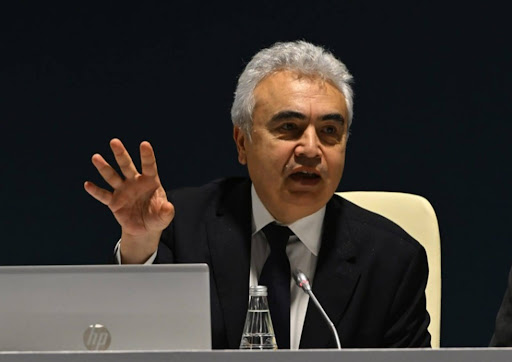
The Iran war’s disruption to Gulf supply chains is now affecting the availability of helium — a critical material for medical imaging, semiconductor manufacturing, and other high-technology applications — the head of the International Energy Agency has warned. Fatih Birol, speaking in Canberra, said the conflict had disrupted not just oil and gas but the full range of commodities flowing through Gulf trade routes, including petrochemicals, fertilizers, sulfur, and helium. He described the overall energy and industrial crisis as equivalent to the combined force of the 1970s oil shocks and the Ukraine gas disruption.
Helium is essential for MRI machines in hospitals, for cooling superconductors, and for semiconductor chip fabrication — industries at the heart of modern healthcare and technology. The Gulf region is a significant producer and exporter of helium, and disruptions to its supply chains have immediate consequences for global industries dependent on the gas. Birol warned that these secondary industrial disruptions, while less visible than the oil and gas emergency, carried serious long-term economic consequences.
The conflict began February 28 with US and Israeli strikes on Iran and has since removed 11 million barrels of oil per day and 140 billion cubic metres of gas from world markets. At least 40 Gulf energy and industrial assets have been severely damaged, and the Strait of Hormuz — through which about 20 percent of global oil flows — remains closed. These combined disruptions represent losses far exceeding any previous energy crisis.
The IEA released 400 million barrels from strategic petroleum reserves on March 11, its largest ever emergency action, and called for demand-reduction measures including remote work, lower speed limits, and reduced commercial flights. Birol confirmed further releases were under consideration, with only 20 percent of available stocks deployed so far. He met with Australian Prime Minister Anthony Albanese and urged coordinated global action.
Iran threatened retaliatory strikes on US and allied energy and desalination infrastructure after Trump’s ultimatum to reopen the strait expired. Birol warned that no country would be immune from the consequences of a prolonged crisis and called for international solidarity. He said the world needed to grapple not just with the headline energy emergency but with its full range of industrial and supply chain consequences.