
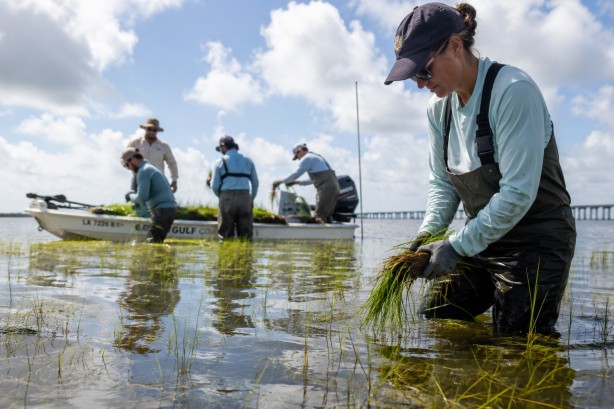
The Gulf of America Alliance has unveiled a series of 20 projects through its Gulf Star Program, targeting the enhancement of both environmental and economic resilience along the Gulf Coast. Spanning across Alabama, Louisiana, Texas, Florida, Mississippi, and regional initiatives, these projects are set to tackle issues ranging from habitat restoration and coastal resilience to water quality improvements and environmental education. By fostering healthier ecosystems and fortifying local communities, the program aims to deliver long-term benefits through a collaborative public-private approach.
Functioning as a public-private partnership, the Gulf Star Program brings together funding from government bodies and private-sector entities to address strategic priorities highlighted by the Gulf states. Beyond financial aid, the program also mitigates challenges frequently faced by smaller organizations and communities, such as administrative hurdles and funding match requirements. The Gulf of America Alliance collaborates with over 165 partners, including government agencies, academic institutions, industry stakeholders, local communities, and nonprofit organizations. These partners concentrate on initiatives related to coastal resilience, habitat conservation, marine debris management, education, wildlife and fisheries, and water resource management.
The newly funded projects encompass a broad spectrum of conservation and community efforts. Planned undertakings include expanding a native plant producer network program to schools in Alabama, boosting hatching success rates for ground-nesting shorebirds in Louisiana, managing wetland ponds for Whooping Cranes in Texas, and implementing innovative methods for early detection of Vibrio bacteria across the Gulf. Additional projects focus on marsh restoration efforts in Texas and Louisiana, marine debris education programs in Florida, compiling regional sediment resource inventories, establishing youth ambassador programs, and launching coastal data-sharing initiatives. Other noteworthy efforts include studies on the northward shift of tropical species, designing and constructing living shorelines, enhancing pollinator habitats along pipeline rights-of-way in Mississippi, conducting community resilience assessments in Alabama, and facilitating hands-on resilience planning throughout all five Gulf states.
Laura Bowie, the Executive Director of the Gulf of America Alliance, attributes the program’s success to the dedication and expertise of its partners who are committed to a more resilient Gulf region. She anticipates that this collaborative effort will yield lasting environmental and community benefits. The 2026 Gulf Star Program receives support from a variety of partners, including 1PointFive, Williams, Sempra Infrastructure, the National Academies’ Gulf Research Program, Shell, Motiva Enterprises, Chevron, Alabama Power, Freeport McMoRan, Genesis Energy, Valero, Clean Gulf Associates, the National Oceanic and Atmospheric Administration (NOAA), and the five Gulf states. This coalition of support facilitates projects that aim to create healthier beaches, cleaner waters, thriving ecosystems, and more robust coastal economies.
Looking forward, the Gulf Star Program is poised to continue fostering practical conservation solutions, encouraging a spirit of collaboration among public agencies, private businesses, researchers, and local communities. These recent investments underscore an ongoing commitment to tackling environmental challenges that impact both ecosystems and regional economic development. For more details, including the 2025 Gulf Star Program Annual Report, visit gulfofamericaalliance.org/gulf-star/. Media inquiries can be directed to David Lee Simmons at +1 504-352-2539. Further information about the organization is available at gulfofamericaalliance.org.
Legal Disclaimer: The information contained in this article has been provided by independent third-party contributors, clients, or content partners. We do not independently verify the accuracy, completeness, legality, ownership, licensing, or reliability of submitted content, including text, images, videos, trademarks, or other media materials. The submitting party is solely responsible for ensuring that all content, including images and media assets, complies with applicable copyright, trademark, licensing, and intellectual property laws. We disclaim liability for any unauthorized use of copyrighted or proprietary materials by third parties. If you believe that any content published on this platform infringes your intellectual property rights, kindly contact the author above for prompt review and resolution.