
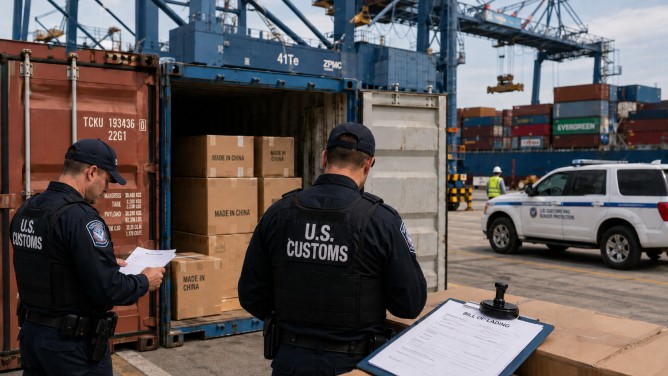
The United States has leveled accusations against 38 countries and the European Union, claiming they participate in a “shadow transshipment network” that allegedly facilitates the entry of Chinese goods subject to high U.S. tariffs into the American market through third-party nations. This is detailed in a report named “The Great Transshipment Scam,” which evaluates the potential scale of such transshipment as reaching around $60 billion, suggesting it has led to considerable losses in U.S. tariff revenue.
The report identifies a wide array of countries and territories as part of this network, including India, Canada, the European Union, Israel, Japan, Mexico, South Korea, Taiwan, and Brazil, among others. It further claims that in 2025, approximately $67 billion worth of goods intended for the U.S. were allegedly rerouted from China via major transit points such as Mexico, India, and Vietnam. This practice purportedly resulted in about $28 billion in lost tariff revenue for the United States.
Specifically, the report sheds light on the Pune-Gujarat-Chennai corridor in India, alleging that Chinese shipments, including electric pumps and compressors, have not only supported local businesses in this region but also heightened competitive pressures on American manufacturers. This situation underscores the broader impact of transshipment practices on the U.S. economy and its manufacturing sector.
In response to these findings, the U.S. is contemplating a series of countermeasures. These include implementing stricter inspections and interdiction processes, imposing additional tariffs, enacting sanctions, and potentially limiting market access for countries deemed to be facilitating tariff evasion. These actions aim to curb the alleged circumvention of U.S. trade policies and protect domestic economic interests.
The allegations and proposed responses highlight ongoing tensions in global trade relationships, particularly in how countries navigate complex networks of tariffs and trade regulations. As the U.S. seeks to address these issues, the effectiveness of its strategies will likely influence future trade dynamics and international economic collaborations.