
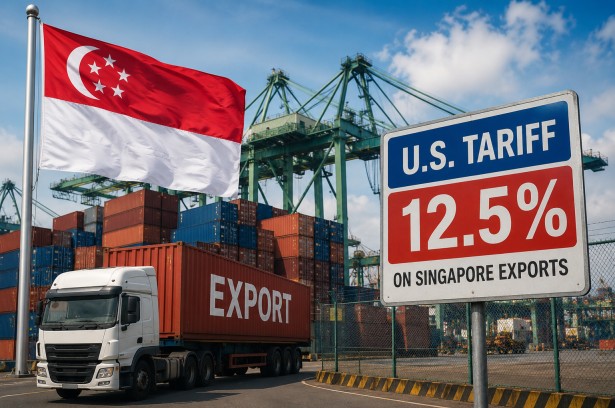
The United States has introduced a new 12.5% tariff on roughly one-third of Singapore’s domestic exports, citing issues related to forced labour enforcement. This move is part of a broader trade policy impacting numerous global economies. Singapore, however, has firmly dismissed these allegations, emphasizing its robust legal framework that actively combats forced labour. The Ministry of Trade and Industry in Singapore has expressed its intention to engage in further dialogue with U.S. trade officials to gain a better understanding of the tariff’s implementation.
Despite the new tariff, several significant categories of Singapore’s exports remain unaffected. These include pharmaceuticals, semiconductors, specific electronics, aerospace products, energy products, as well as goods already subject to sector-specific tariffs in the U.S. The exemption of these key exports offers some relief to Singapore’s trade sector, although concerns linger about the broader implications of this policy shift.
Business groups have voiced concerns that the introduction of this tariff could heighten uncertainty for manufacturers and exporters operating between the two nations. This apprehension is compounded by an ongoing separate investigation by the U.S., which could potentially lead to additional trade measures. The looming possibility of further restrictions has prompted industry leaders to recommend that companies diversify their export markets and enhance their supply chain resilience to mitigate potential disruptions.
As Singapore navigates these trade challenges, it remains focused on maintaining open lines of communication with the United States. The aim is to ensure that any misunderstandings are clarified and that the impact of the new tariff is minimized. Meanwhile, businesses and industry stakeholders are urged to adapt to the evolving trade landscape by exploring alternative markets and reinforcing the strength of their supply chains.