
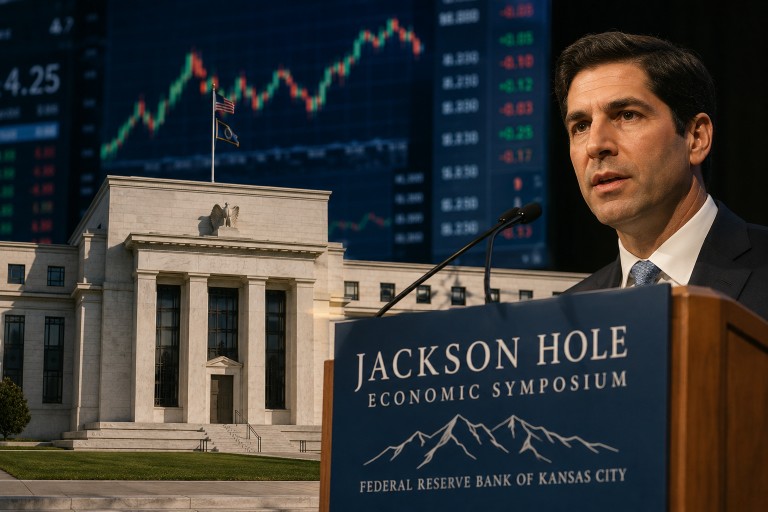
As the Jackson Hole symposium approaches, investors eagerly anticipate insights from US Federal Reserve Chair Kevin Warsh regarding the future of interest rates, inflation management, and the implications of rising Treasury yields on monetary policy. In recent times, Warsh has shifted from offering detailed forward guidance, opting instead to direct investor attention towards market signals. This strategy has introduced a degree of uncertainty concerning the Federal Reserve’s approach to tackling inflation, which continues to hover above the 2% target.
The increase in long-term Treasury yields adds further complexity to the economic landscape. A faction of investors contends that the elevated yields are effectively tightening financial conditions, which might lessen the necessity for additional interest rate hikes. This perspective has gained traction, particularly following the US Treasury’s decision to augment its buybacks of long-maturity bonds in response to a recent sell-off. Although officials have positioned this action as a measure to enhance market liquidity, many investors interpret it as an attempt to alleviate pressure on long-term borrowing costs.
This situation has heightened market anticipation for Warsh’s upcoming address, with stakeholders eager for a definitive stance on how the Federal Reserve plans to realign inflation with its 2% objective. Additionally, there is keen interest in understanding whether further rate increases are on the horizon. The lack of explicit guidance from the Federal Reserve has left markets in search of clearer signals regarding its monetary policy trajectory.
Warsh’s speech at Jackson Hole is expected to be scrutinized for any indications of the Federal Reserve’s future policy direction, particularly in connection with the dynamics between bond market conditions and central bank decisions. Investors remain on the lookout for any commitments that would provide greater clarity on how the Federal Reserve intends to navigate the current economic environment.