
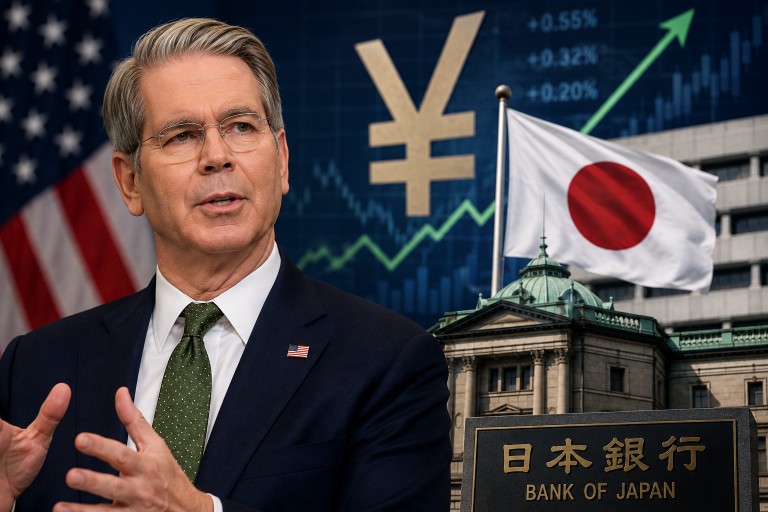
Amid growing speculation about Japan’s monetary policy direction, U.S. Treasury Secretary Scott Bessent has voiced his strong backing for Japan’s measures to support the yen. His remarks came during discussions with Bank of Japan (BOJ) Governor Kazuo Ueda, which took place on the fringes of the G20 finance ministers and central bank governors’ meeting in Asheville, North Carolina. Bessent highlighted how the yen’s current weakness is exacerbating inflationary pressures, emphasizing the critical need for prudent monetary policy and effective communication to stabilize inflation expectations and mitigate excessive currency fluctuations.
Market analysts are increasingly anticipating another interest rate hike by the BOJ at its upcoming policy meeting set for September 17-18, following a previous rate increase in June. Such a move could accelerate expectations of a more rapid shift towards tighter monetary policy by the central bank. As Japan’s interest rates climb, the country’s benchmark 10-year government bond yield has recently surpassed 3% for the first time since 1996. This development reflects growing concerns about Japan’s fiscal health and the possibility of more stringent monetary policy measures.
Higher yields present both challenges and advantages. On one hand, they are contributing to increased borrowing costs and a heightened debt-servicing burden for the government. The Finance Ministry has projected that if borrowing costs continue to rise, interest payments could significantly increase in the years to come. On the other hand, these higher rates are offering better returns for savers and financial institutions, particularly through enhanced earnings on deposits and long-term investments.
Japanese households are feeling the pinch, as well, with rising mortgage costs, especially for those with fixed-rate loans. This places the BOJ in a challenging position, tasked with the responsibility of bolstering the yen and controlling inflation without imposing undue stress on households, businesses, or the government’s fiscal responsibilities. The central bank must carefully navigate these competing pressures to maintain economic stability.