
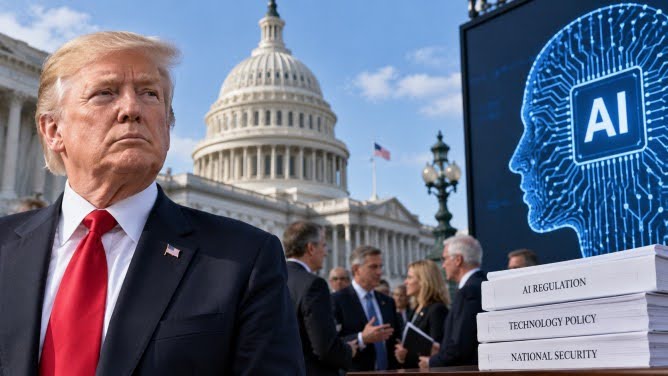
Amid escalating discussions about the implications of artificial intelligence, U.S. President Donald Trump is encountering mounting pressure from Congress to implement more stringent regulations on AI technologies. This call for oversight comes from both Democrats and a faction of Republicans, who are expressing concerns over the potential risks associated with advanced AI systems.
President Trump, however, has downplayed these concerns, arguing that additional restrictions could potentially undermine the United States’ competitive edge against China in the AI sector. He maintains that preserving the U.S.’s leadership in AI development should be a priority, suggesting that more regulations could impede this goal.
Nevertheless, lawmakers from both political parties have highlighted various issues linked to AI, including cybersecurity threats, job displacement, and the misuse of AI capabilities. There is also anxiety over the risks posed by increasingly sophisticated AI systems. In response, Senate negotiators are deliberating over potential legislation that would require AI developers to proactively manage significant risks and permit federal authorities to limit the release of models deemed unsafe.
Some Republican voices caution against excessive regulation, which they argue might stifle innovation and inadvertently give China a technological advantage. Despite this, they support initiatives for independent testing and improved transparency. House Speaker Mike Johnson has echoed these sentiments, opposing any broad halt in AI advancement due to concerns over maintaining U.S. competitiveness.
Notably, several leading AI companies have also advocated for bolstering safety protocols. OpenAI, for instance, has proposed mandatory national AI safety standards, including independent evaluations, cybersecurity safeguards, and incident reporting for advanced AI models.
The debate unfolds as U.S. lawmakers juggle a busy legislative calendar leading up to the November elections, with the scope and nature of potential federal regulations on AI still under active discussion. Balancing safety, innovation, and national security remains a pivotal challenge in shaping future AI policy.