
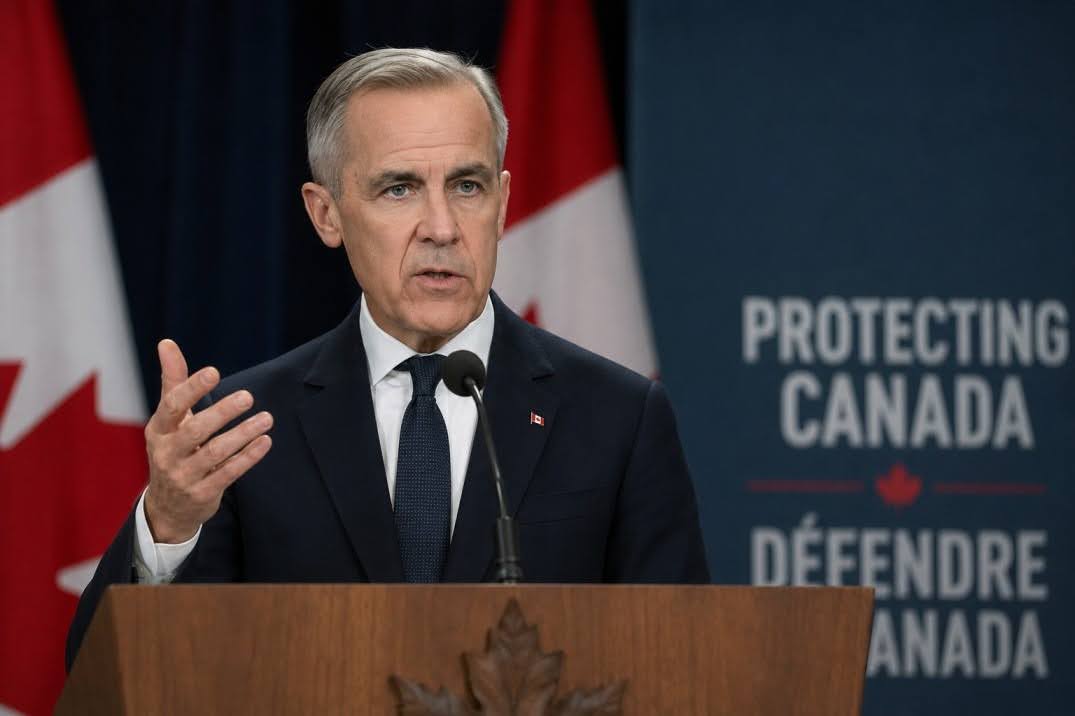
In a striking rebuke, Canadian Prime Minister Mark Carney has condemned the Trump administration’s handling of trade relations, urging U.S. officials to abandon the name-calling and engage in serious negotiations. Carney’s comments come just days before Canada is set to implement retaliatory tariffs on American products. He expressed that the disparaging remarks aimed at Canada fall short of the dignity expected from those in high office and asserted that meaningful trade discussions can only proceed once Washington abandons superficial tactics and focuses on substantial negotiations.
The tension between the two nations has been escalating for weeks, exacerbated by President Trump’s recent decision to rename Lake Ontario as “Lake America,” a move that has been widely rejected north of the border. Meanwhile, the chief U.S. trade negotiator has minimized the potential consequences of the conflict, suggesting that the economic repercussions would be more severe for Canada than the United States. He also stated that there are currently no active trade discussions underway.
This discord follows the breakdown of trade talks between the U.S. and Canada about a week ago. In response, the U.S. imposed hefty 50% tariffs on $20 billion worth of Canadian exports. Canada, a major trading partner for the U.S., has announced plans to retaliate with equivalent tariffs on $20 billion of American goods, slated to take effect on September 8. The impact of these measures is expected to be felt by consumers on both sides of the border, affecting everyday products.
The U.S. negotiator has attributed much of the stalled negotiations to Canadian demands, specifically citing the issue of reduced taxes on heavy-duty trucks as a significant sticking point. He questioned Canada’s commitment to reaching a deal, warning that if Canada restricts American goods and services, the U.S. might consider similar retaliatory actions.
However, Canadian officials have presented a different narrative, pointing to internal divisions within the White House over who was in charge of the negotiations. Prime Minister Carney has also highlighted the U.S. negotiators’ treatment of Canada’s French-language protections as contentious, emphasizing that these are established rights, especially in Quebec. President Trump has framed the dispute as Canada’s desire for the benefits of close ties with the U.S. without full integration, accusing Canada of imposing steep tariffs on American agricultural products for years. The U.S. negotiator conceded there was confusion over the negotiation agenda, indicating uncertainty about whether the breakdown was due to political or economic reasons, but maintained that the choice was never between the current tariffs and completely duty-free trade.