
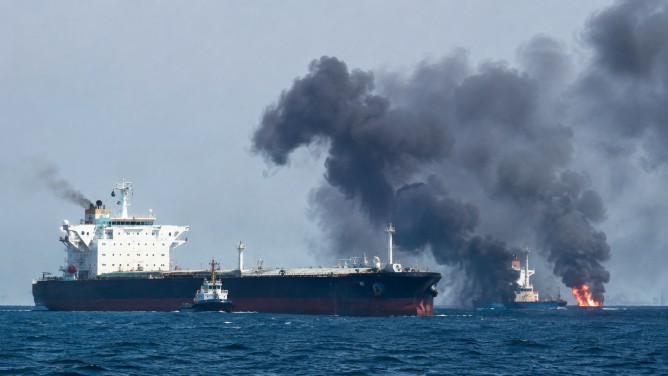
The Islamic Revolutionary Guard Corps (IRGC) of Iran has claimed responsibility for attacking two oil tankers that were attempting to navigate through the Strait of Hormuz while under the escort of U.S. military forces. According to the IRGC, the tankers were in violation of a designated shipping route. Following this incident, four additional tankers reportedly reversed course and did not proceed through the strait.
The Strait of Hormuz remains a critical artery for global energy shipments, yet it has become increasingly volatile amid intensifying hostilities between Iran and the United States. This growing conflict has led to significant disruptions in maritime traffic, contributing to a spike in global crude oil prices, which have surged to over $90 per barrel. The heightened military tensions have also permeated other parts of the region.
In neighboring Kuwait, authorities reported the interception of Iranian drones aimed at critical military and strategic facilities. Fortunately, there were no casualties reported from this incident. Meanwhile, in Lebanon, Israeli forces conducted a major strike in the vicinity of Beaufort Castle, asserting that their target was Hezbollah infrastructure. The Lebanese government has accused Israel of violating a standing ceasefire agreement with this action.
Back in the United States, President Donald Trump has convened a cabinet meeting at Camp David to evaluate the conflict’s progression and its ramifications on the economy. The ongoing hostilities have led to increased fuel and consumer prices, placing additional pressure on the U.S. administration. Recent surveys show a decline in public support for the war, adding to the challenges faced by the government as it navigates this complex international situation.
The persistent instability across the region has inadvertently resulted in higher profits for major energy corporations, as the elevated oil prices continue to ripple across global markets. The situation remains fluid, with the potential for further escalations or diplomatic developments in the near future.