
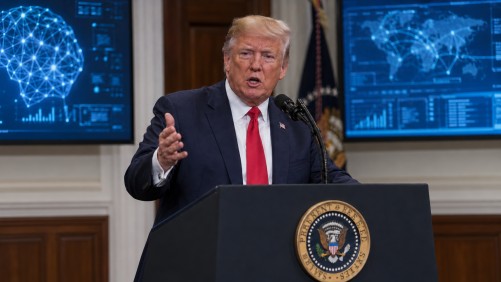
As debates over the safety and regulation of artificial intelligence (AI) intensify globally, the United States is poised for a significant move in the sector. In an effort to address these rising concerns, former President Donald Trump has declared plans to appoint an AI czar and create an “AI Force” to oversee the burgeoning technology. This initiative mirrors the establishment of the US Space Force, although specific details about its framework and objectives remain sparse.
President Trump’s announcement comes at a time when international leaders and tech giants are grappling with the dual challenge of fostering AI innovation while mitigating its potential risks. The former president has consistently argued against stringent AI regulations, citing fears that heavy-handed oversight could stifle American innovation and allow China to outpace the US in technological advancements.
In a recent social media post, Trump downplayed the perceived threats of AI, suggesting that existing legal frameworks could suffice in managing harms caused by the technology. He emphasized that his administration’s approach would not hinder the industry’s progress, underscoring AI’s transformative potential for the US economy and reaffirming the necessity of maintaining a competitive edge over China.
This federal initiative follows similar efforts at the state level, such as California Governor Gavin Newsom’s proposed panel on AI safety regulations. This panel aims to explore mechanisms to manage AI systems that may deviate from intended safeguards. Meanwhile, several Republican leaders, including Florida Governor Ron DeSantis and Utah Governor Spencer Cox, have advocated for enhanced AI oversight, with Cox urging Congress to restrict the transfer of advanced technologies to China.
Trump’s proposal highlights the ongoing policy dialogue within the United States on balancing the economic benefits of AI development with public safety concerns. As AI systems become increasingly complex and autonomous, the call for responsible management of this powerful technology is likely to grow louder, influencing future legislative and regulatory measures.