
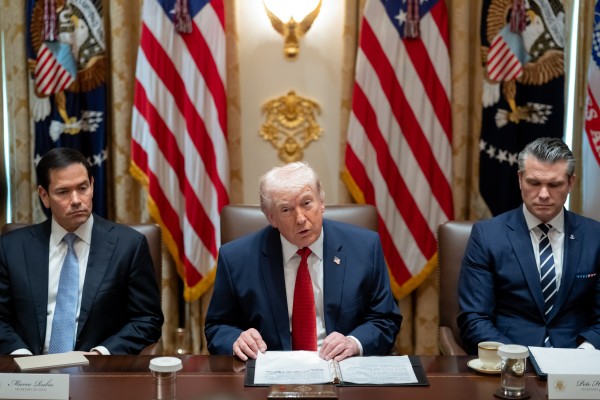
During a recent Senate Republican luncheon, a heated exchange erupted between President Donald Trump and Senator Bill Cassidy concerning the administration’s handling of the Iran conflict. The confrontation centered on the War Powers Act resolution, which aims to restrict the president’s ability to initiate military actions against Iran without congressional approval. Cassidy, who supported the resolution, pressed Trump for more comprehensive information about the conflict, highlighting the necessity for transparency regarding the military operation’s objectives and progress.
As the discussion intensified, both Trump and Cassidy reportedly raised their voices, illustrating the growing internal divisions within the Republican Party over foreign policy and legislative priorities. The tension was eventually defused, but it underscored the challenges the party faces as it grapples with differing views on critical issues. Cassidy’s call for clarity represents a broader demand among lawmakers for detailed briefings from the administration on military engagements.
The clash over Iran coincided with Trump’s decision to delay signing a bipartisan housing bill that had successfully passed through Congress. The president tied his approval of this housing legislation to the enactment of the Save America Act, which proposes more stringent voter identification measures and restrictions on mail-in voting. This linkage has further complicated the legislative landscape, as it intertwines foreign policy debates with domestic electoral issues.
These developments have exposed fault lines within the Republican Party as it prepares for upcoming elections. Some Republican senators have voiced their dissatisfaction with the internal discord, which they fear could undermine the party’s legislative strategy and electoral prospects. The juxtaposition of these contentious issues—foreign policy, election law, and legislative tactics—has created a challenging environment for party unity.
Democrats, meanwhile, have criticized Trump’s move to withhold the housing bill, arguing that it is essential legislation intended to address surging housing costs and improve affordability for American families. They contend that delaying the bill’s passage could have detrimental effects on efforts to expedite construction and make housing more accessible across the country. The standoff over the housing bill epitomizes the broader struggle between party priorities and governance, reflecting the complex dynamics at play in Washington.