
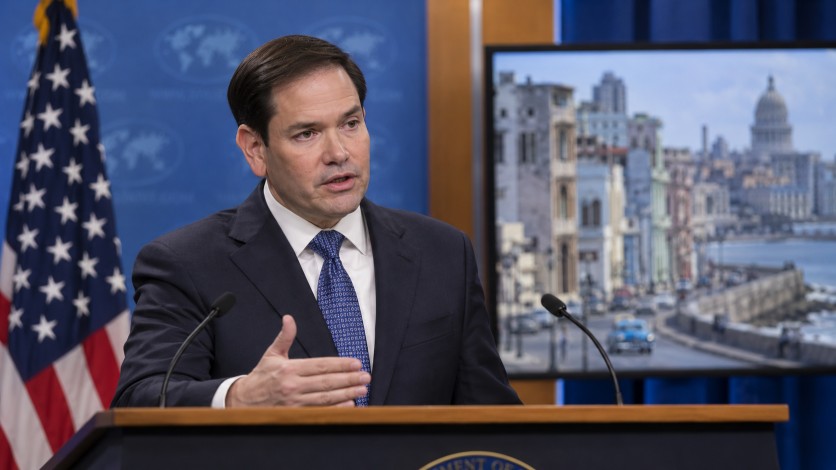
Amidst growing public discontent in Cuba over corruption and economic hardships, U.S. Secretary of State Marco Rubio has called on Cubans to seize the moment for political change. Rubio’s appeal comes in the wake of President Donald Trump’s recent remarks at a Florida rally, where he suggested that U.S. warships returning from Iran might pass near Cuba, fueling speculation about U.S. intentions toward the island nation.
Rubio, through a social media post, encouraged Cubans seeking change to act, highlighting the economic struggles and social inequalities faced by many on the island. While Rubio’s comments were clear in their encouragement, they stopped short of outlining any specific actions or plans.
President Trump’s comments have drawn criticism from Cuban officials, who accuse the United States of meddling in Cuban affairs. Cuba’s Deputy Foreign Minister Carlos Fernández de Cossío responded mockingly to the suggestion of U.S. cooperation, highlighting the sensitive nature of U.S.-Cuban relations.
Historically, Rubio has been an outspoken critic of Cuba’s socialist governance, expressing concerns about its economic system and its alliances with governments viewed unfavorably by the U.S. The Trump administration has upheld a stance of economic pressure on Cuba through sanctions, while also expressing a willingness to engage in talks to address ongoing disputes.
Despite recent diplomatic discussions, relations between the United States and Cuba remain tense. Washington continues to express concerns over Cuba’s security ties, while Havana opposes the longstanding U.S. economic embargo.
Cuba is currently facing an extended economic and energy crisis, characterized by power outages, food shortages, and inflation, contributing to public protests and notable emigration. As these issues persist, the call for political change and reform on the island resonates with a growing segment of the population.