
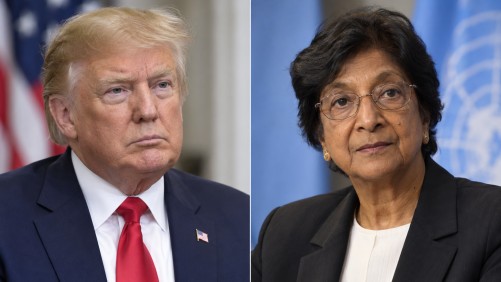
South African lawyer Navi Pillay has been awarded the 2026 Nobel Peace Prize, recognized for her significant contributions to promoting human rights, international law, and peace. The announcement, made on October 9, underscores the Nobel Committee’s focus on the importance of international legal frameworks amid mounting global pressures on these institutions. Pillay’s career has been marked by her staunch defense of human rights, her involvement in the anti-apartheid movement, and her work investigating crimes against humanity.
Former US President Donald Trump, who had been a contender for the prize, was not selected. Trump had previously argued that his administration made notable strides in resolving or preventing international conflicts. He pointed to efforts in the Israel-Hamas conflict and attempts to ease tensions between Iran and Israel. Trump also highlighted US-led negotiations aimed at ending Russia’s war against Ukraine as part of his peace-building initiatives.
Despite these claims, several conflicts remain unresolved. Diplomatic efforts have yet to successfully address the ongoing war involving Iran, and Russia’s invasion of Ukraine continues with little sign of a lasting resolution. Trump’s proposed recovery plan for Gaza has faced several hurdles, including disputes over Israeli troop withdrawals and the disarmament of Hamas.
Trump has expressed frustration over not receiving the Nobel Peace Prize, a matter he has publicly criticized alongside the committee’s decisions in the past. Historically, four US presidents—Theodore Roosevelt, Woodrow Wilson, Jimmy Carter, and Barack Obama—have been recipients of this prestigious award.
While Trump did not secure the Nobel Peace Prize, he has received other forms of recognition. In December 2025, FIFA President Gianni Infantino awarded him the inaugural FIFA Peace Prize. Additionally, María Corina Machado, who won the 2025 Nobel Peace Prize, symbolically presented her award to Trump in January 2026. Nonetheless, the Nobel Institute maintains that its prizes cannot be revoked, shared, or transferred once announced.