
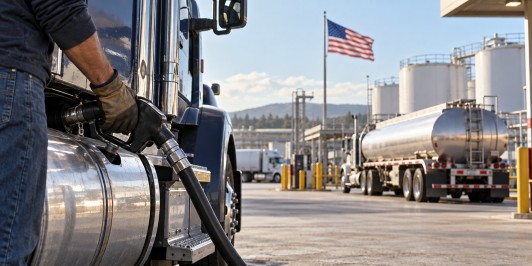
As diesel prices in the United States soar to unprecedented levels, the Trump administration is considering a temporary 90-day ban on diesel exports. This measure aims to bolster domestic fuel supplies and potentially ease the financial strain on consumers. The administration’s proposal seeks to retain more diesel within the country rather than allowing it to reach overseas markets, with the hope that this will increase availability and exert downward pressure on prices.
Despite the potential benefits, energy analysts and economists have expressed skepticism about the effectiveness of such a ban. One significant challenge is the uneven distribution of diesel supplies across the country. While much of the refining capacity is concentrated along the Gulf Coast, shortages are emerging in the Northeast and West Coast. With existing pipelines already nearing capacity, transporting additional fuel from the Gulf Coast to these regions poses logistical difficulties.
Alternative transportation methods, such as shipping diesel by water, could help, but they would likely take longer and incur higher costs. Consequently, increasing domestic supplies may not lead to significant price reductions in areas facing shortages. Moreover, the global market plays a crucial role in influencing US diesel prices, as international fuel prices and supplies impact domestic markets. US refiners, for instance, are incentivized to sell overseas when international prices are more lucrative.
Current global conditions, including disruptions linked to the Iran war and attacks on Russian refining capacity, have further strained fuel markets, contributing to tighter global supplies. Historical precedents show that the US has previously imposed energy export restrictions during times of market stress, such as following the 1973-74 Arab oil embargo. However, these restrictions were gradually lifted by 2015 as US oil production increased.
While a temporary diesel export ban might enhance domestic availability in the short term, its overall impact would hinge on factors like refinery production, transportation capabilities, regional demand, and global fuel prices. Should refiners decide to cut production due to reduced export profitability, the expected increase in domestic supply could be less significant than anticipated.
Ultimately, while the proposal may offer some relief by adding diesel to the US market, it is unlikely to fully address the broader supply and pricing pressures currently affecting diesel markets. The complexities of distribution, global market dynamics, and infrastructure limitations present formidable challenges that a temporary export ban alone may not overcome.