
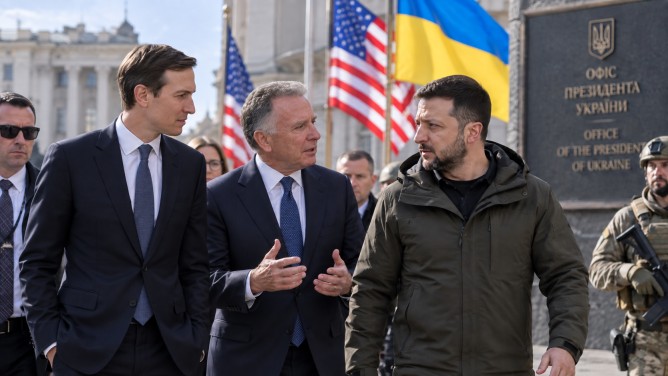
In a concerted diplomatic effort to address the ongoing conflict in Ukraine, US envoys Jared Kushner and Steve Witkoff met with Ukrainian President Volodymyr Zelenskyy in Kyiv on Sunday. The visit aimed to make headway in the stagnant peace process with Russia. This meeting came on the heels of their discussions with Russian President Vladimir Putin in Moscow the day before. Witkoff described the talks with Zelenskyy as both “constructive and substantive,” expressing optimism about the potential for broader negotiations that could involve the US, Ukraine, and European nations in the near future.
The talks in Kyiv briefly included national security advisers from the UK, France, and Germany, underscoring the international interest in resolving the conflict. President Zelenskyy emphasized Ukraine’s desire to engage in trilateral discussions with the US and European partners to further the peace dialogue. He also highlighted the critical need for ongoing Western support as Ukraine braces for another challenging winter. Key areas of focus include bolstering air defense capabilities, securing energy assistance, and increasing shipments of US liquefied natural gas.
Progress in peace negotiations has been elusive, primarily due to persistent disagreements over territorial control in eastern Ukraine. Previous discussions have revolved around a 20-point peace plan developed collaboratively by Washington and Kyiv. However, reaching a consensus with Russia on several pivotal issues remains a significant hurdle.
Meanwhile, the situation on the ground continues to be dire. Ukrainian authorities reported that Russian strikes had claimed the lives of at least eight individuals and injured 69 others across Ukraine over the last 24 hours. Kyiv has been particularly affected by ongoing drone assaults, and the country is experiencing a shortage of US-made Patriot interceptor missiles. With the conflict nearing its fifth year, Ukrainian officials are increasingly concerned about potential Russian attacks on energy infrastructure and the likelihood of heightened aggression during the winter months.