
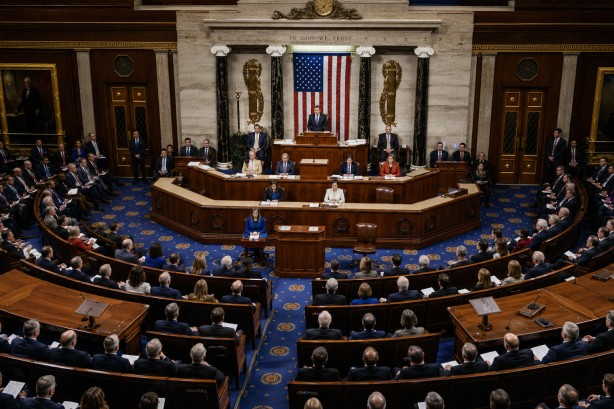
The U.S. House of Representatives has narrowly passed a significant defense spending bill, known as the National Defense Authorization Act (NDAA), amounting to $1.15 trillion. The vote, which primarily followed party lines, saw the bill move forward with a 216-212 approval, sending it next to the Senate for further deliberation. The legislation is designed to bolster U.S. military capabilities, featuring a notable 5% to 7% pay increase for military personnel and substantial investments to enhance the armed forces.
Republican leaders have championed the bill as essential for modernizing the military and augmenting national defense. However, the measure has faced strong opposition from Democrats, who criticize the scale of defense spending, especially as funding for various domestic programs is being curtailed. The debates over the bill have also been influenced by broader political issues, notably President Donald Trump’s recent military action against Iran, which was conducted without obtaining prior congressional approval. This has raised concerns among lawmakers about the potential for escalating U.S. military involvement in the Middle East.
Contentious elements within the bill include voting-related provisions strongly supported by Trump. These measures, which entail stricter voter identification requirements and limitations on mail-in voting, have been met with resistance from Democrats who argue that such topics should not be addressed within defense legislation. Meanwhile, the House saw vigorous discussions on various amendments, including those addressing transgender military policies and defense healthcare. A proposed amendment aimed at halting U.S. military aid to Ukraine was ultimately rejected.
In a related development, House Republicans have moved forward with a budget framework that would allocate $73 billion for military operations involving Iran. Although approved, this figure falls short of the broader defense funding levels proposed by the Pentagon. The ongoing debates underscore the complexities of balancing defense priorities with domestic policy considerations, amid a backdrop of evolving U.S. involvement in international conflicts and domestic political challenges.